Do geometric artists have a gene for lines?
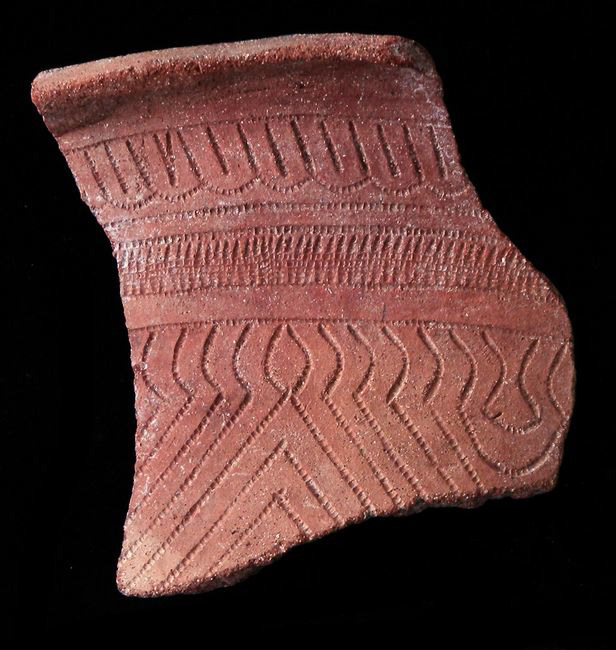
Lapita pottery fragment, New Caledonia, c. 1000–800 BCE.
Mondrian and Kandinsky were far from pioneers. Humanity’s fascination with geometry goes back to prehistory — sacred patterns, labyrinths, mandalas, ritual architecture.
At the intersection of my scientific and spiritual readings, one idea slowly emerged:
Geometry may be a fast route towards different states of consciousness, while figurative art first leads us into the swamps of thought, memory and interpretation.
A face, a landscape, a body, a scene — all immediately trigger memories, associations and psychological projections. The mind starts narrating before we even notice it.
A line, a square, a circle, a repeated geometric structure operate differently.
They are almost universal signs. They belong to everyone and no one. It is harder to project our personal history onto them. Harder for the ego to build its usual machinery around them.
Automatic thought finds less territory there.
And geometric forms ask for something else: presence.
When we look at symmetry, rhythm, proportion or spatial relationships, our attention can shift towards structure itself.
Much like meditation, attention narrows onto a single object. Thoughts do not disappear, but their grip may loosen.
Perhaps this is one reason why geometry appears so often in spiritual traditions: mandalas, yantras, sacred architecture, mosaics, rose windows, symbolic diagrams.
Geometry can produce a form of inner silence
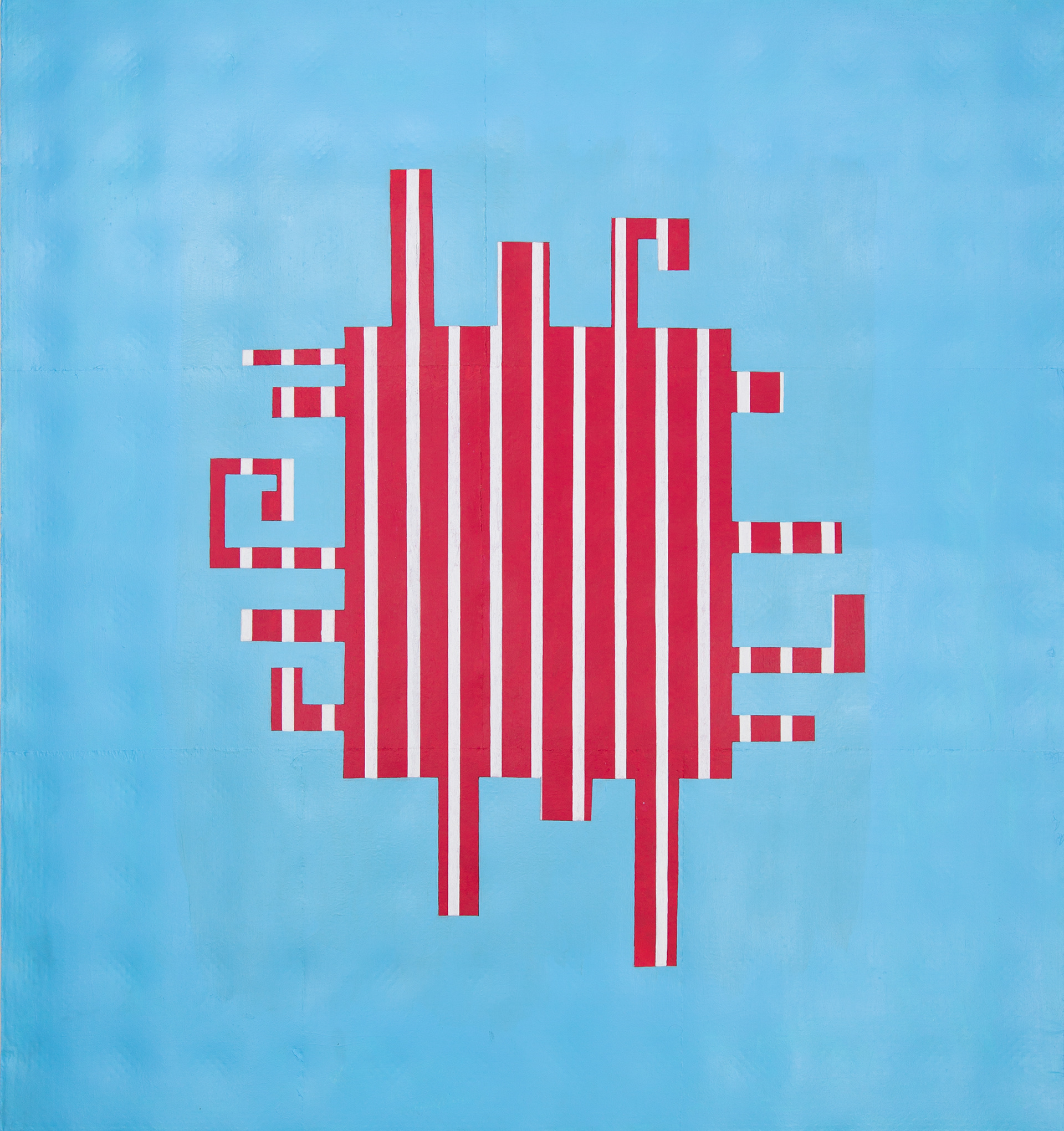
Self-Portrait 10.04, 2010
But I am not a fanatical minimalist.
I am not interested in removing every trace of humanity or narrative from forms. Nor am I looking for a perfectly cold abstraction, stripped of the hand and its accidents.
My signs remain connected to organic existence — to tension, conflict, desire and identity.
There is often a central organic space in my drawings, almost like a tentacular heart caught inside a structure.
I probably stand closer to the expressionists than to the purists.
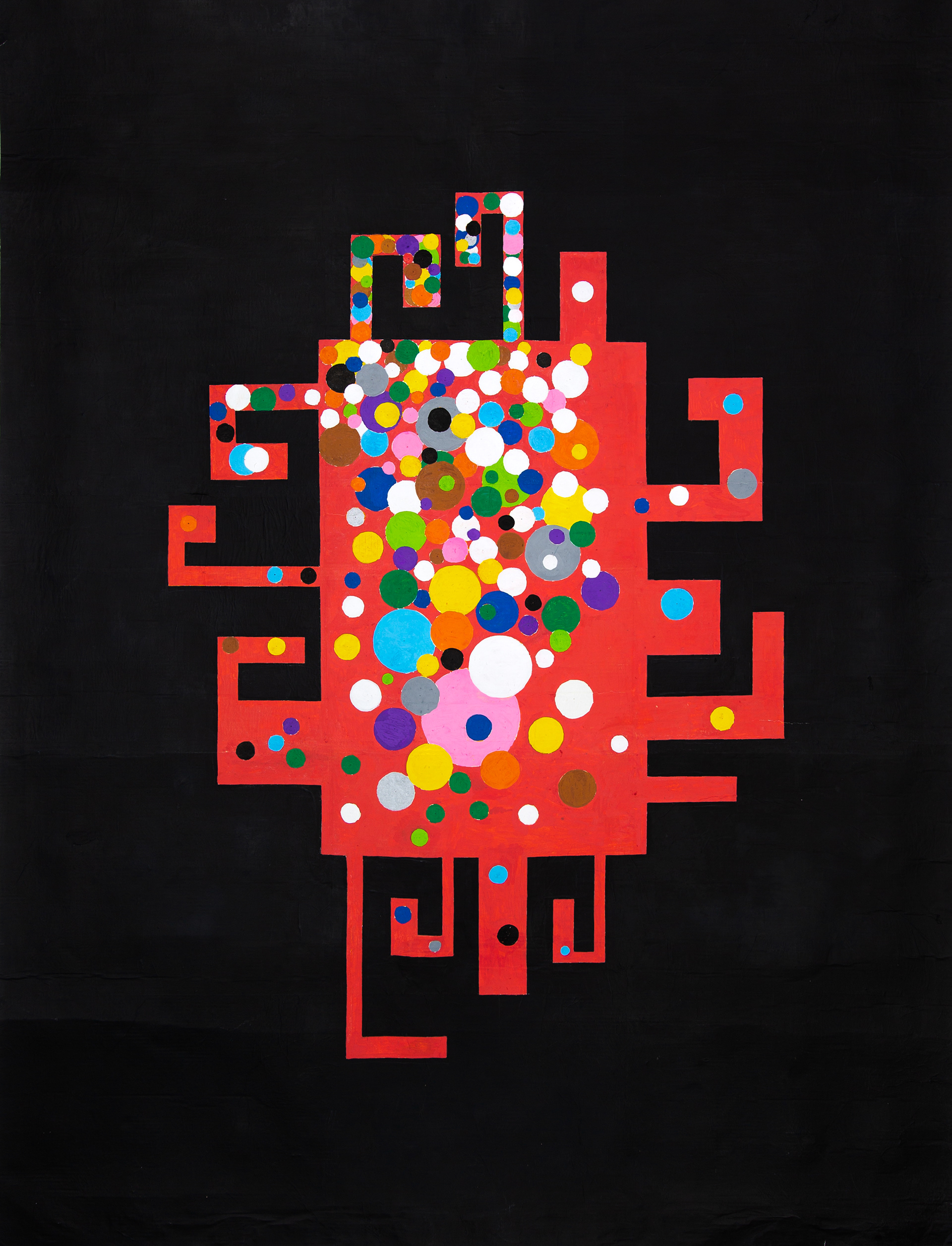
Self-Portrait 10.03, 2010
For me, geometry is not a way of escaping human experience. It is a way of moving through mental noise without entirely abandoning stories, humour, ego, contradiction or emotion.
I consider myself a spiritual artist, but I am not seeking total dissolution into cosmic abstraction.
I still love psychological life too much. Personal mythologies. Absurd ideas. Conflict. Language games.
My drawings have a grammar.
They can be interpreted. People can project emotions, separations, tensions, perhaps even stories into them.
Thank God for that.
Otherwise art risks becoming pure theory.
What interests me, then, is not eliminating thought, but perhaps interrupting it for a moment.
Interrupting the automatic mechanisms that endlessly manufacture our fixed identities, inherited beliefs and repetitive inner fictions.
Allowing other perceptions to emerge.
New fictions.
Living ones.