Can we invent a language alone?
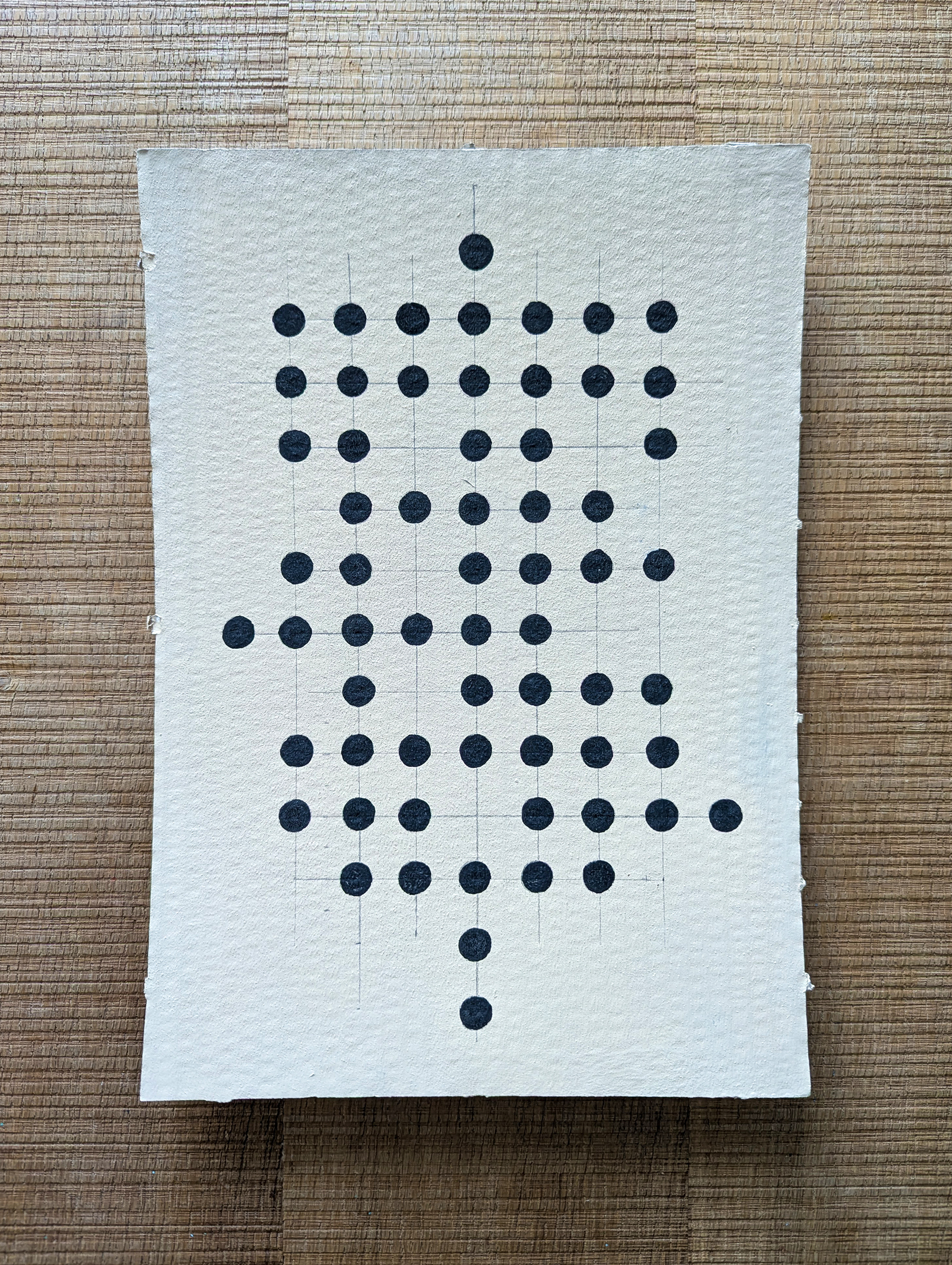
Self-Portrait 26.114, 2026
Language is a way of breaking the ice that separates two beating hearts.
This sentence came to me when I discovered a story told by Herodotus nearly 2,500 years ago.
Pharaoh Psamtik I is said to have had two infants raised without anyone ever speaking to them, hoping to discover which language would spontaneously emerge.
Behind this cruel experiment lies a question: do we need others to invent a language?
Every human society has developed languages made of words.
Until now, writers were the best at working with them. They knew how to find them, make them shine, and thread them onto imaginary strings to weave sentences, novels, poems, songs, scripts…
They now have competition from AI.
With LLMs, something of the magic of words evaporates, at least to my eyes.
They become what they have always been: signs.
Old, pre-coloured beads, quietly waiting for a human, or an AI, to play with them.
And above all, they do not contain what they describe.
The word “fear” does not tremble.
The word “love” loves no one.
The word “pain” has never hurt.
Perhaps that is why, when I was young, I wanted nothing to do with them.
Things are better now, but I still struggle to connect them to my emotions.
I have always used them like an AI, mechanically.
And one day, I needed to invent another language.
Unlike the pharaoh’s experiment, it was not meant for communication.
I needed it to release the energy trapped inside me.
I needed another vehicle.
I chose the line.
From it, I built a grammar, then a program: to capture my emotions by following a set of instructions.
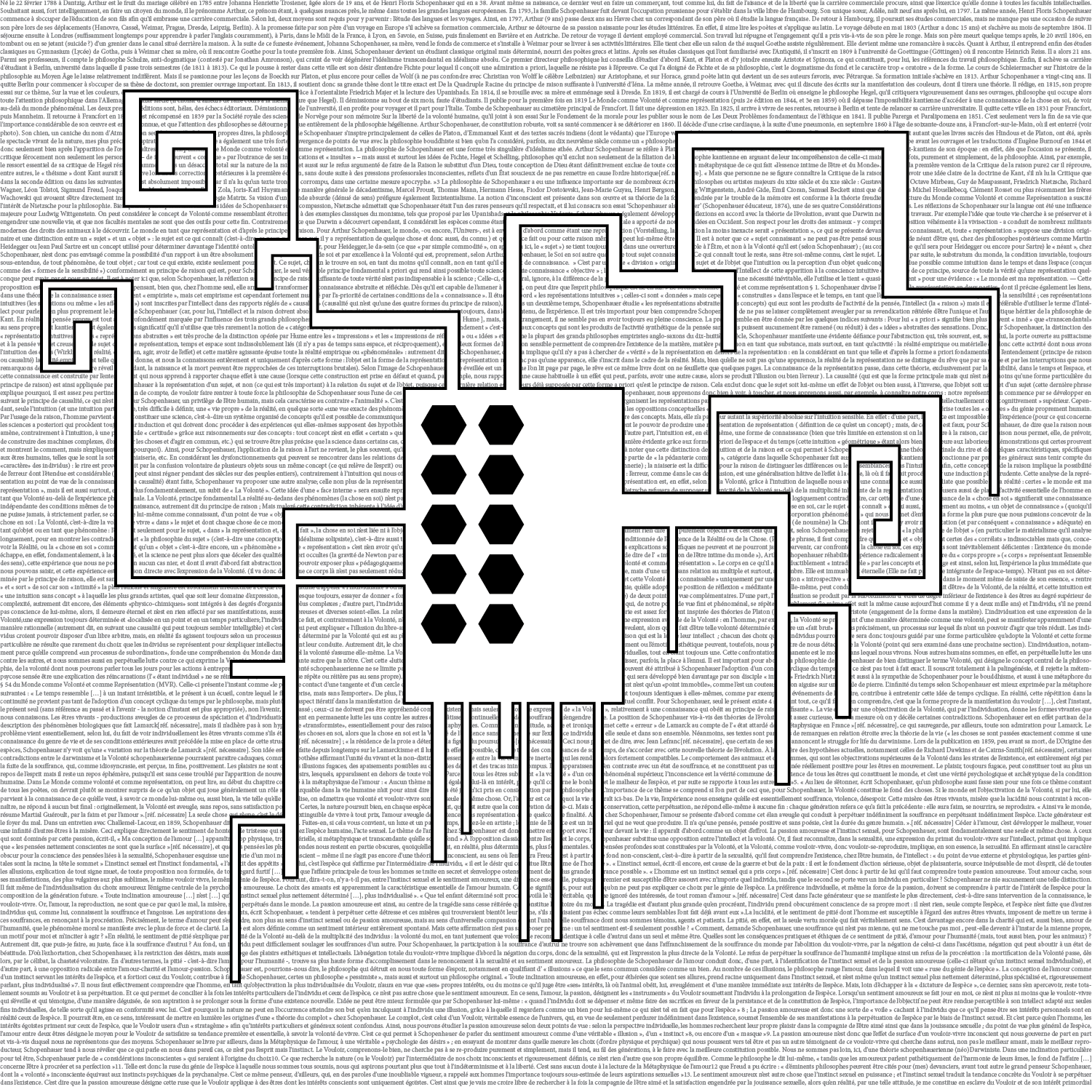
Self-Portrait 11.11, 2011
With each drawing, the language becomes more complex.
And by using it again and again, I discovered something I had not anticipated:
a language creates its own reality.
It opens up possibilities for expansion, but it also draws boundaries beyond which it becomes impossible to go.
It is structural.
Marshall McLuhan showed something comparable with media: a new medium does not simply carry what we say. It also transforms the way we perceive, act, and relate to the world.
The Internet has considerably expanded our reality. Words are still there, but they now coexist with images and sounds.
And yet, at the very moment I am writing this text, I am still a prisoner of words.
Pinned against the wall of a reality they help create, partial and rudimentary.
So to believe that machines capable of manipulating the same words as ours, only faster, will, on their own, push back the boundaries of our lives is a mirage.
On the other hand, entrusting them with part of that reality might perhaps give us back something more precious:
time.
Time to invent other languages.
Other ways of perceiving.
Other realities.