WHAT REMAINS BENEATH IDENTITY?
For 17 years, I’ve been exploring my identity through drawing,
and I still don’t know who I am.
and I still don’t know who I am.
That’s the irony of my works titled Self-Portraits.
My identity keeps recomposing itself,
in an entanglement of emotions and energies.
in an entanglement of emotions and energies.
Is an identity in constant motion still an identity,
or simply a succession of states over time?
or simply a succession of states over time?
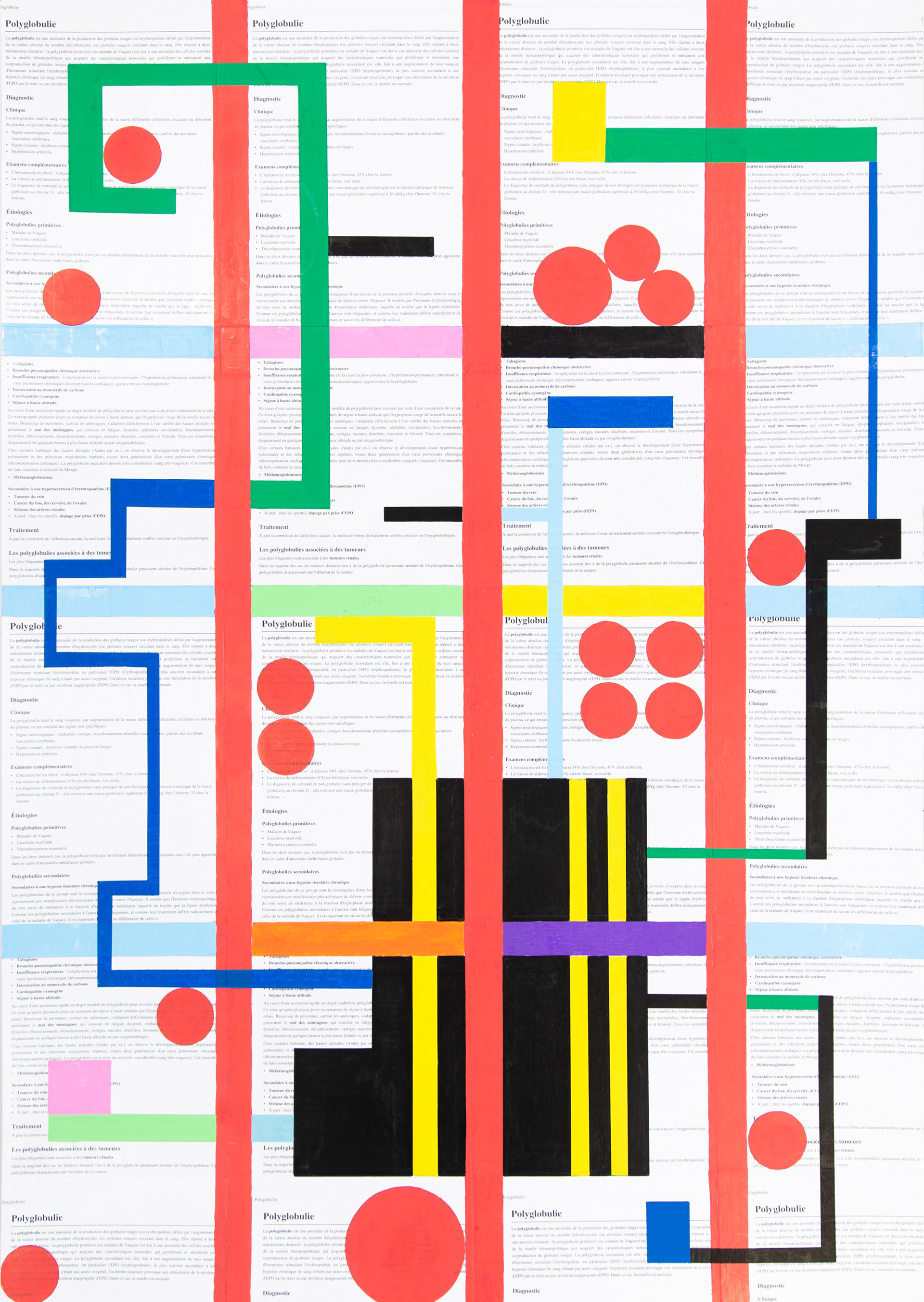
Self-Portrait 10.19, 2010
Figurative portraiture struggles to capture these micro-variations.
A face does not reveal everything the body goes through.
The attributes attached to it — place, clothing, name — remain on the surface.
The attributes attached to it — place, clothing, name — remain on the surface.
And yet, this is often how we think about identity:
first as an image, something visible,
then completed by psychology through assumed traits,
inferred from behaviours observed in others.
first as an image, something visible,
then completed by psychology through assumed traits,
inferred from behaviours observed in others.
As if interpretation alone could define the truth of a human being.
My Self-Portraits follow another path.
Less immediate, perhaps — but more direct.
My Self-Portraits follow another path.
Less immediate, perhaps — but more direct.
The lines carry the emotions
at the very moment I draw them.
at the very moment I draw them.
Colour, thickness, rhythm, position —
all become information taken at the source,
emerging from the hand that connects the body to the surface.
Identity no longer appears as something fixed,
all become information taken at the source,
emerging from the hand that connects the body to the surface.
Identity no longer appears as something fixed,
but as an ongoing process.
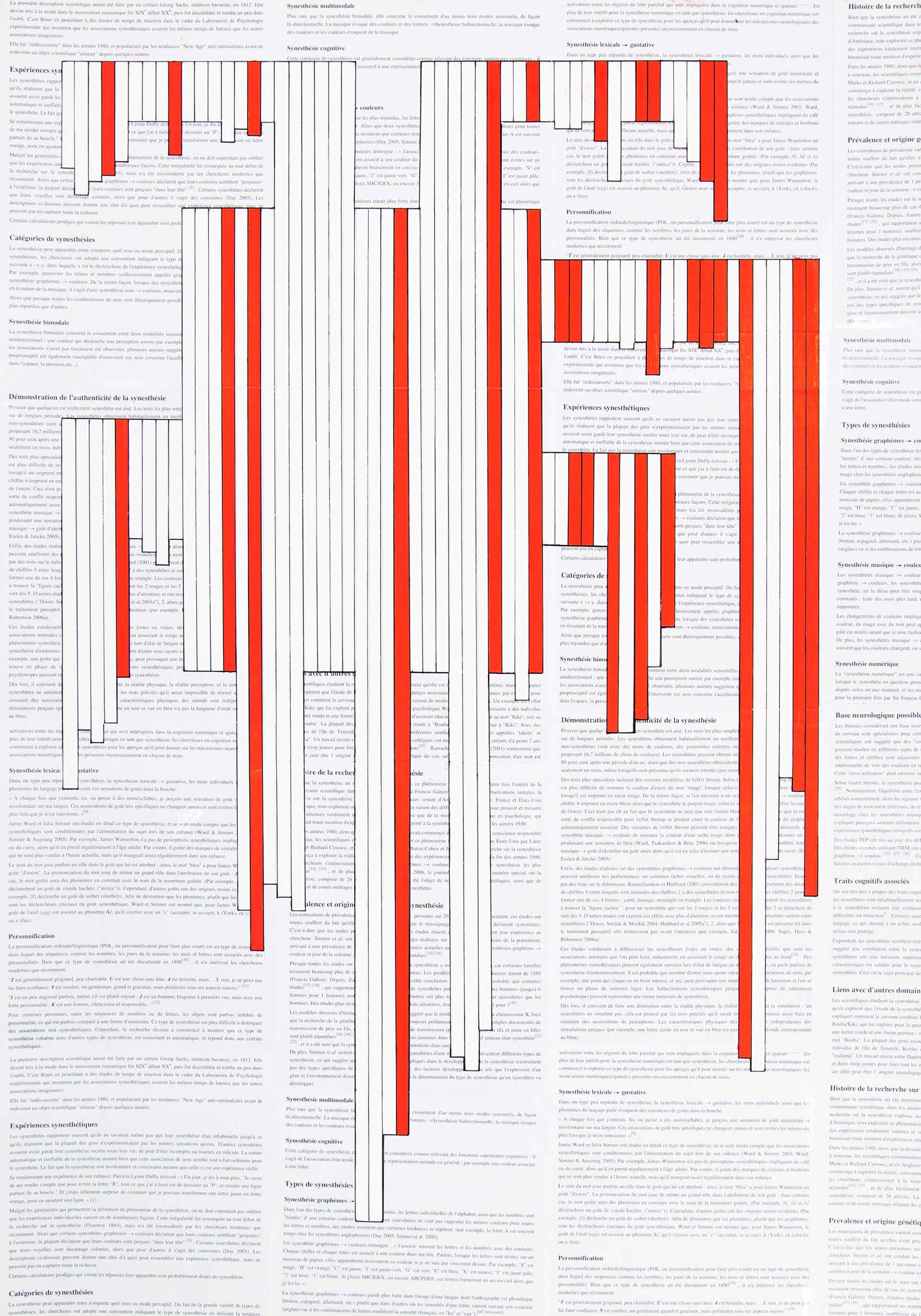
Self-Portrait 10.20, 2010
And yet, modernity tends to freeze it.
Through its systems of classification — increasingly numerical —
it turns identity into data, categories and profiles.
it turns identity into data, categories and profiles.
These forms are not neutral.
They shape perception, organise interactions,
and sometimes end up opposing what they themselves have helped define.
They shape perception, organise interactions,
and sometimes end up opposing what they themselves have helped define.
Identities facing other identities.
Algorithms then adjust what we see
and, gradually, we may begin to recognise ourselves
in what they return to us.
and, gradually, we may begin to recognise ourselves
in what they return to us.
We become these fragments,
while believing we are choosing freely.
while believing we are choosing freely.
A recent event shifted this reflection.
A heart attack.
When I woke up, one thing became clear:
everything I had accumulated — memories, references, certainties —
could have disappeared.
everything I had accumulated — memories, references, certainties —
could have disappeared.
In an instant.
Faced with that possibility,
these constructions lost their obviousness.
these constructions lost their obviousness.
I found myself in a tired but living body,
stripped of many reference points,
no different from the other bodies around me.
And yet, something remained.
stripped of many reference points,
no different from the other bodies around me.
And yet, something remained.
Neither memory nor image,
but a form of presence.
but a form of presence.
A simple, indefinable energy
that nothing seemed able to fully erase.
that nothing seemed able to fully erase.
Perhaps this is where what we share truly lies,
beneath the identities we construct.
beneath the identities we construct.
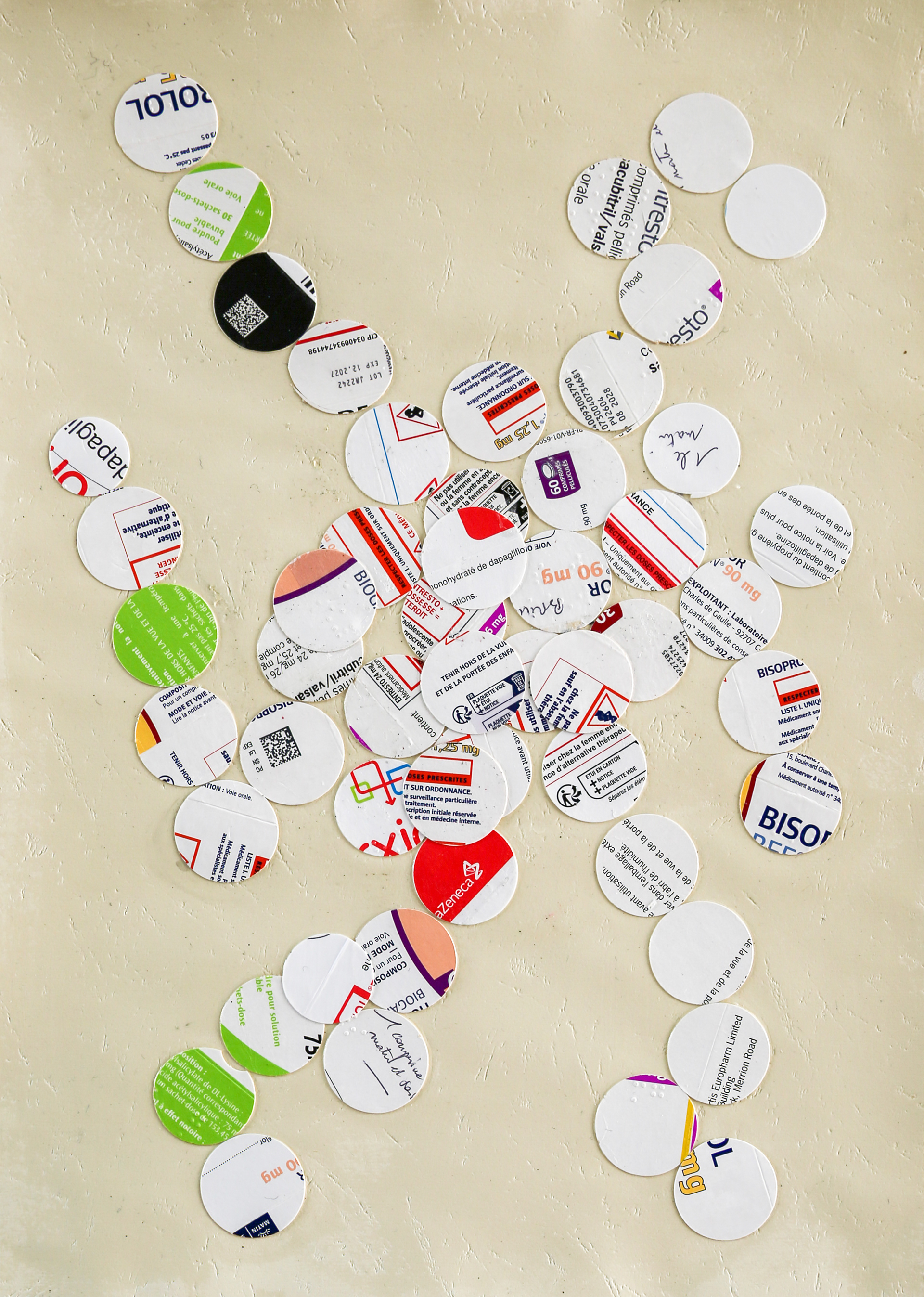
This Self-Portrait is made from medical packaging,
cut and reassembled, 2026
If I have doubted my drawings in recent times,
those doubts have shifted.
those doubts have shifted.
For me, art is no longer about representing an identity,
but about approaching something beneath it —
but about approaching something beneath it —
something shared, invisible,
moving through forms without ever settling into them.
moving through forms without ever settling into them.